
Published: August 18, 2026 | Published By: Real Creative Agency
American EcoFuels™ (OTC: AEFI) May Be On The Verge of Disrupting the Energy Industry
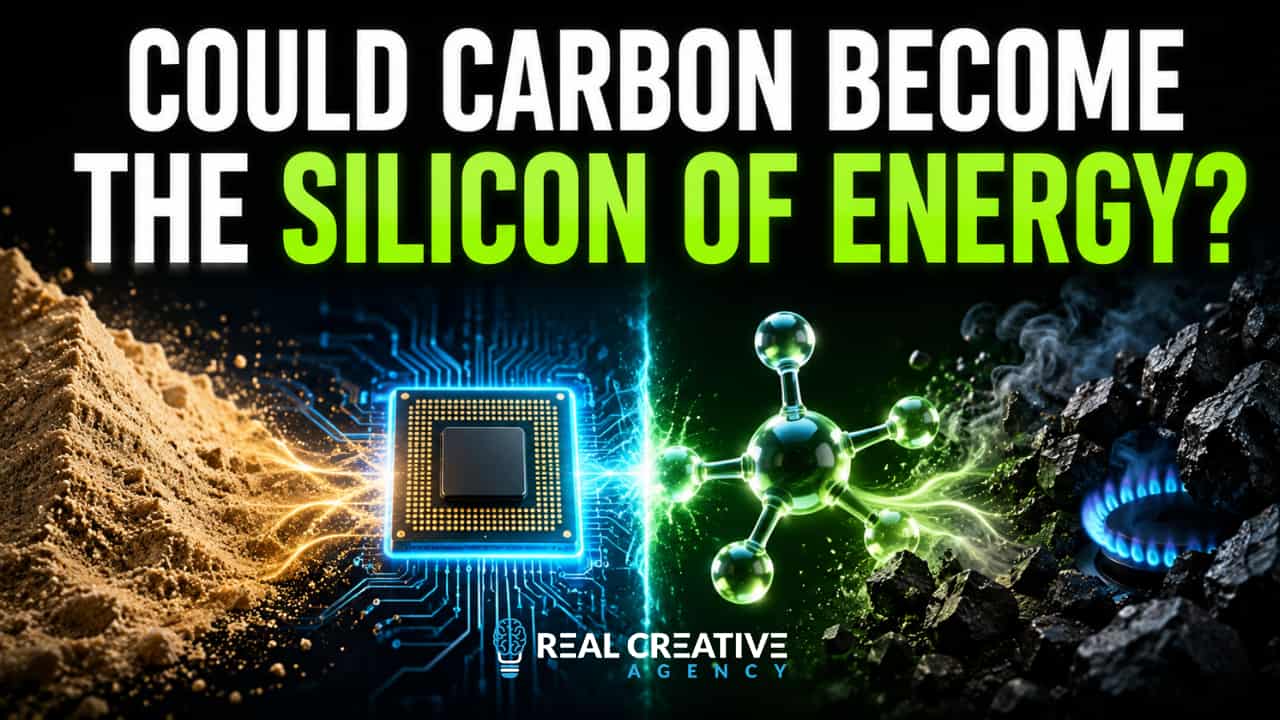
Silicon transformed ordinary sand into the foundation of computing. Could AEFI help transform coal and natural gas into engineered energy for aviation and heavy transportation?
How Coal and Natural Gas Could Become the Silicon of Energy
What if one of the biggest new energy stories on Wall Street begins with the same basic idea that changed computing?
Computer chips begin with one of the most ordinary materials on Earth: silicon, commonly obtained from silica-rich materials such as sand.
Sand itself did not create the computer revolution. Human engineering did.
We learned how to purify silicon, control it, and build microscopic electronic systems that now power smartphones, artificial intelligence, data centers, automobiles, and nearly every part of the modern economy.
An abundant raw material became the foundation of a global industry.
Now a little-known public company called American EcoFuels™ Inc. (OTC: AEFI) is pursuing a similar industrial philosophy with carbon-based resources.
AEFI is not making computer chips from coal or natural gas. The comparison is about the transformation process.
Instead of accepting a raw material in the form nature provided, the company has a technology designed to break carbon-based feedstocks into basic chemical building blocks and rebuild them into synthetic liquid energy.
It could represent the evolution from extracting energy to engineering energy.
Silicon Was Not Valuable Because It Was Rare
Silicon became transformational because engineers learned what they could make from it.
Before the semiconductor industry, sand was simply sand. Today, highly engineered silicon sits at the center of the digital economy.
The value was not hiding inside the raw material. The value was created through purification, precision, and design.
That same idea provides a simple way to understand the opportunity AEFI is pursuing.
From Raw Carbon to Chemical Building Blocks
Coal and natural gas contain carbon and hydrogen, two fundamental ingredients used to create liquid fuels.
Traditional energy production generally extracts, refines, and burns what nature formed over millions of years.
Gas-to-liquids and coal-to-liquids processes take a different route. They can convert carbon-based material into synthesis gas, commonly called syngas, which consists mainly of carbon monoxide and hydrogen.
Those chemical building blocks can then be used to construct new liquid hydrocarbons.
In simple terms, the process does not merely clean up an existing barrel of crude oil. It starts with basic ingredients and assembles a new product.
The Crucial Difference Between the Analogy and the Science
Coal, natural gas, and synthetic aviation fuel are not single molecules. They are mixtures of many compounds.
AEFI is therefore not redesigning one universal “carbon molecule.”
Its technology is intended to convert carbon-containing resources into a controlled mixture of hydrocarbon molecules suitable for specific applications.
The accurate investor story is still powerful:
Humanity engineered ordinary silicon for computing. AEFI wants to engineer abundant carbon for next-generation energy.
Why Aviation Needs Engineered Liquid Energy
Cars can increasingly switch to batteries. Homes can run on electricity. Many factories can connect to the power grid.
Commercial aviation has a much harder problem.
Large aircraft must carry their energy into the sky. Batteries remain far heavier than liquid jet fuel for the amount of usable energy they store.
The laws of physics demand a highly energy-dense solution. For long-distance commercial aviation, that still means liquid fuel.
At the same time, governments and airlines are pushing the industry toward lower-emission alternatives.
That creates an enormous challenge. Aviation must burn cleaner, but airlines cannot simply replace the global aircraft fleet, airport infrastructure, and fueling system.
The HUGE Importance of a Drop-In Product
American EcoFuels is developing SAF-SPK, or Sustainable Aviation Fuel – Synthetic Paraffinic Kerosene.
The company says that, following successful testing and certification, its product is intended to work as a 100% drop-in aviation fuel in approved aircraft and engines without requiring modifications to airplanes, airport infrastructure, or normal fueling operations.
That may be the biggest part of the story.
The company is not asking the aviation industry to replace the machine. It is working to change what goes into the machine.
That is similar to building a new form of gasoline that can be sold through the gas stations already standing.
The Gas Station Opportunity in the Sky
Investors often focus on companies building the next airplane, electric vehicle, or battery.
But another business model can be just as important: supplying what those machines must buy repeatedly.
Every commercial flight consumes energy. The airplane may remain in service for decades, but it must be refueled after every journey.
That makes the aviation market resemble an enormous network of gas stations in the sky.
AEFI is not trying to sell the airplanes. It is pursuing the product airplanes must continue buying every time they fly.
Why the Opportunity Could Extend Beyond Aviation
The broader synthetic-fuels platform may eventually have applications beyond commercial aircraft.
Potential markets could include military aviation, cargo fleets, shipping, long-haul trucking, heavy agricultural and construction equipment, freight trains, and industrial generators.
These are machines that require large amounts of portable energy and cannot always be easily electrified.
The larger investment thesis is therefore not limited to one niche aviation product.
It is about engineering liquid energy for the parts of the global economy that batteries may struggle to reach.
AEFI Is Pursuing a Different SAF Feedstock Story
Many existing sustainable aviation fuel pathways rely on biomass-based inputs such as used cooking oil, vegetable oil, or animal fats.
Those pathways are important, but their raw materials may be limited relative to the potential scale of global aviation demand.
AEFI says its planned process is designed to produce SAF-SPK without relying on biomass.
Its strategy centers on gas-to-liquids and coal-to-liquids technologies that can use natural gas, coal, and other feedstocks.
This creates a very different story.
Instead of competing for a limited pool of waste oils and fats, the company is trying to turn abundant or underutilized carbon resources into an engineered product.
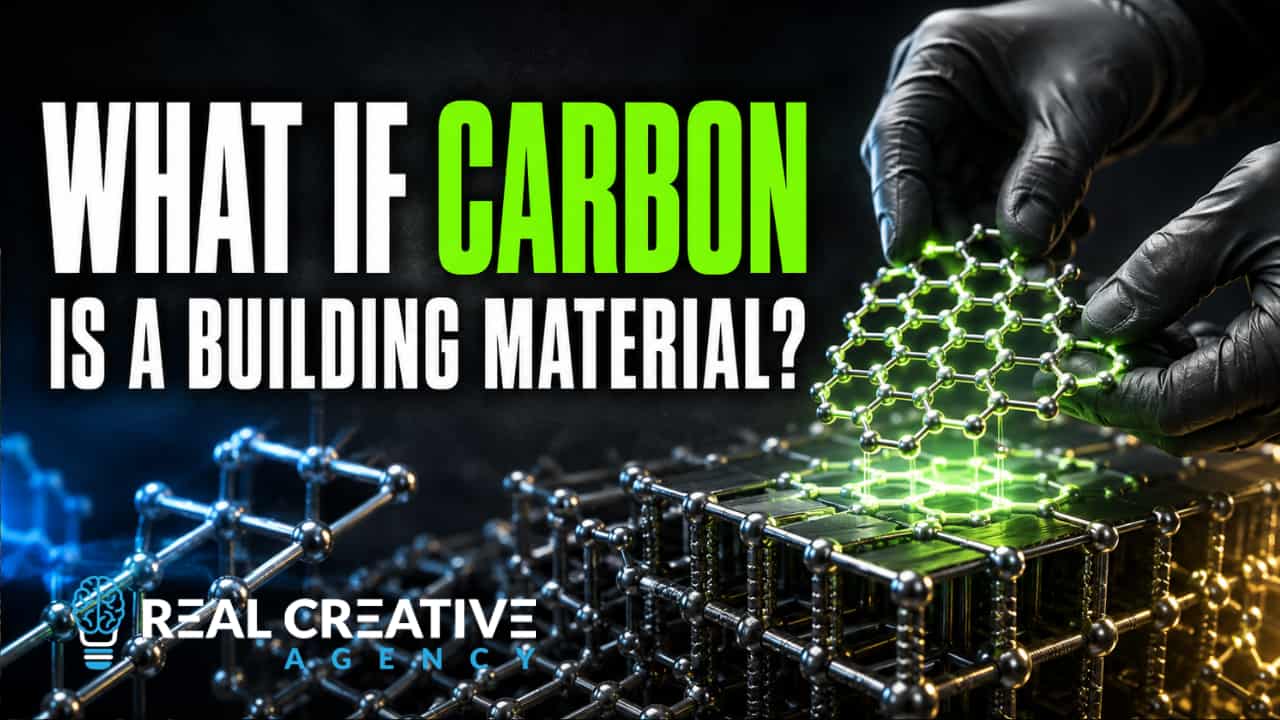
From a Carbon PROBLEM to a Carbon BUILDING BLOCK
Coal is often viewed as a legacy energy source. Flared or stranded natural gas can be treated as a waste problem.
AEFI’s potential opportunity is to view those resources differently.
Rather than treating carbon only as something to extract and burn, the company wants to use it as a chemical building block.
That does not automatically make every pathway sustainable. The lifecycle emissions depend on the feedstock, energy source, production process, carbon management, and regulatory methodology.
But the underlying industrial idea is significant: take an abundant resource, separate it into usable components, remove unwanted impurities, and rebuild it for a higher-value purpose.
This is molecular engineering applied to energy.
Where American EcoFuels™ Stands Today
American EcoFuels became the company’s public name and AEFI its ticker symbol in June 2026 following its transaction with Kepler GTL Technologies.
The company says it is advancing gas-to-liquids and coal-to-liquids technology, developing a SAF test plant, expanding its intellectual property portfolio, and conducting outreach regarding potential airline offtake arrangements.
The planned test facility is intended to produce enough SAF-SPK for evaluation by aircraft manufacturers, engine manufacturers, and aviation certification organizations.
This means AEFI remains a development-stage and commercialization story. The major investor milestones still include plant execution, product testing, certification, financing, commercial agreements, and eventual scale-up.
Those risks matter. The opportunity must be judged alongside the work still required to turn the technology into a commercial product.
Could Carbon Become the Silicon of Energy?
Silicon changed the world when human beings stopped seeing sand as an ordinary material and started seeing it as a platform for engineering.
AEFI is asking investors to look at carbon through a similar lens.
Coal and natural gas may not only be resources we extract and burn. They may also be raw ingredients that can be separated, purified, and rebuilt into precisely engineered liquid energy.
The next generation of aviation may not be powered only by what nature created underground.
It may be powered by what human beings learn to design, molecule by molecule.
That is the larger AEFI story.
The evolution from extracting energy to engineering energy.
This article is for informational purposes only and is not financial advice. American EcoFuels is a development-stage company, and many of its plans and expected benefits remain subject to technical, regulatory, financing, certification, and commercialization risks. Conduct your own research before making any investment decision.
This blog post contains forward-looking statements and speculative analysis. This content is for informational purposes only and does not constitute investment advice. American EcoFuels ™ (AEFI) is a publicly traded company; investors should review all SEC filings and consult a financial advisor before making investment decisions.
Disclaimer:
This communication is a paid advertisement for American EcoFuels™ Inc. to enhance public awareness of the Company, its products, its industry, and its potential as an investment opportunity. This communication is not intended as, and should not be construed to be, an offer to sell or a solicitation of an offer to buy any security.
Real Creative Agency, and their owners, managers, employees, and assigns were paid by the Company to create, produce, and distribute this advertisement. This compensation should be viewed as a major conflict for this presentation to be unbiased.
On July 1, 2026, American EcoFuels™ Inc. agreed to pay Scott Shaffer $2,500 per month for 6 months.
This communication is not intended as, and should not be construed to be, an offer to sell or a solicitation of an offer to buy any security. Neither this communication nor the Company purports to provide a complete analysis of the Company or its financial position. The Company is not, and does not purport to be, a broker-dealer or registered investment adviser. This communication is not, and should not be construed to be, personalized investment advice directed to or appropriate for any particular investor. Any investment should be made only after consulting a professional investment advisor and only after reviewing the financial statements and other pertinent corporate information about the Company. Further, readers are advised to carefully consider the Risk Factors identified and discussed in the government filings. Investing in securities is speculative and carries a high degree of risk.
Real Creative Agency

EMERGING TECHNOLOGY CONSULTANTS
Helping emerging technology companies since 2005.